Lashes
Lash Extension Supplies for Less: Cutting Costs Without Cutting Corners
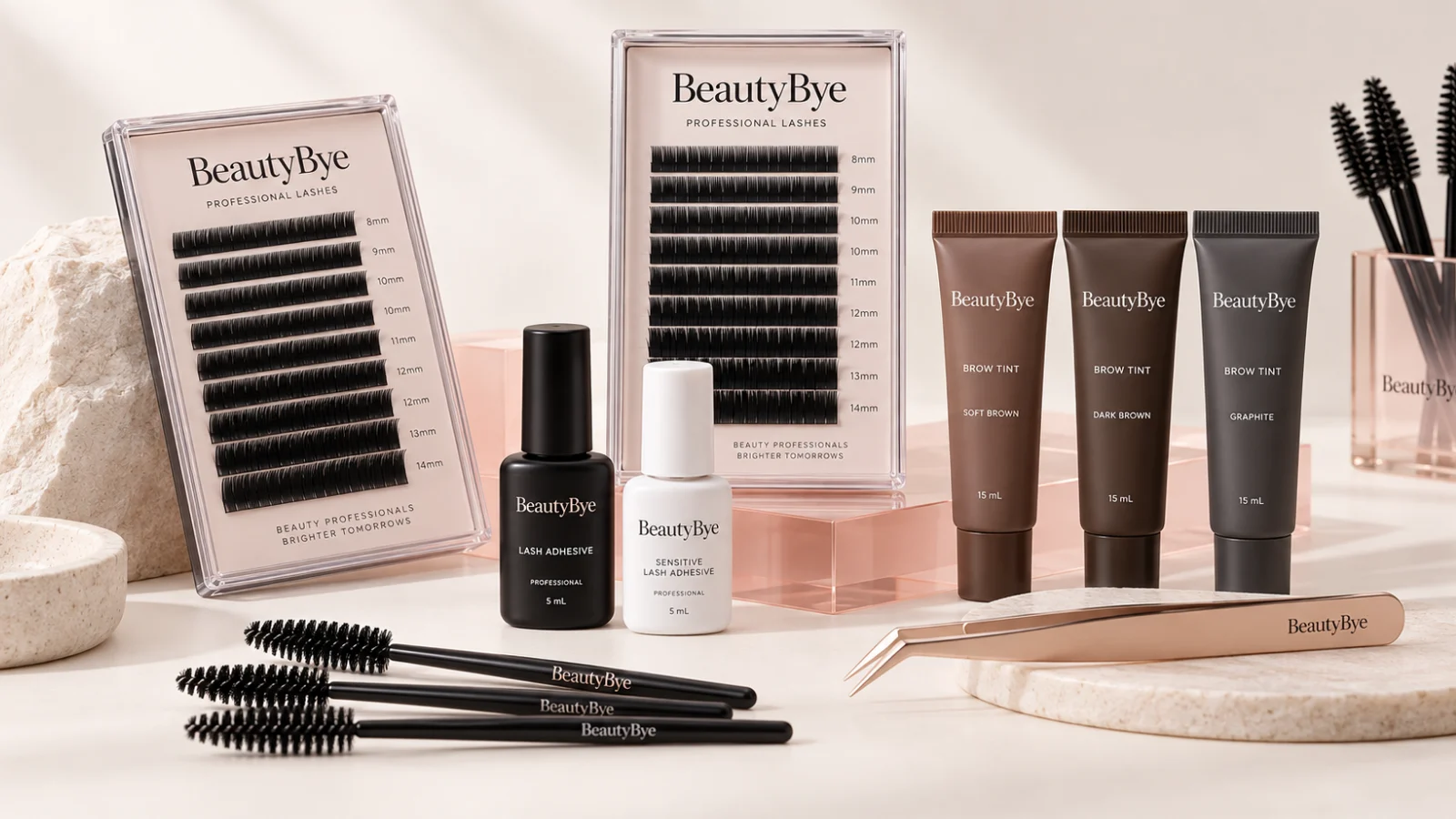
Cheap lash supplies are easy to find, but a lash kit bought purely on price usually costs more in the end: trays that fan unpredictably, adhesive that doesn't retain, and clients who don't rebook. Lash techs who genuinely keep costs down work the other way round. They buy good professional supplies for less, and they waste less of them. Here's how that plays out across a lash kit: where saving is safe, where it isn't, and where running costs quietly leak.
Where Lash Techs Spend Their Money
A working lash kit has three kinds of cost:
One-off equipment: bed, stool, lamp, trolley, tweezers.
Recurring stock: trays, adhesive, primer, remover, cleanser.
Single-use hygiene items: micro-brushes, wands, eye pads, tape, gloves and masks.
Each kind needs a different approach to saving.
Equipment: The Biggest One-Off Savings
Furniture and equipment last for years and change hands often as techs upgrade, move rooms or leave the industry. Buying second-hand is often the largest single saving in a lash budget.
Lash beds. A comfortable bed matters for long appointments. Second-hand beds from salon refits can be excellent value. Check stability, upholstery and mechanisms. See used beauty beds and treatment couches.
Stools and trolleys. Simple and durable, and good second-hand buys.
Lamps and magnifiers. Often sold on upgrade. Check electrical condition and that the arm holds position.
Tweezers. Unused surplus tweezers from course kits and duplicate orders are good value. Used tweezers can't be listed on BeautyBye under its Product Safety Policy. Here's what to check.
Trays: Buy Professional Trays for Less
Trays are the recurring cost where surplus buying works best. Lash techs regularly have trays they won't use: curls or lengths that didn't suit their clients, sample trays from suppliers, and mixed trays from training kits.
Cheap trays vs professional trays for less
Cheap unbranded trays | Professional trays bought as surplus | |
|---|---|---|
Consistency of curl and thickness | Can vary | As specified by the manufacturer |
Fanning behaviour | Varies | Predictable for your technique |
Finish | Variable | Consistent |
Saving | On price | On price, with less compromise |
Tips
Buy the curls and lengths you actually use most, not a full range "just in case".
Keep mixed trays and sample trays for practice and training.
Store trays covered, dry and in their packaging.
Adhesive: Save by Wasting Less, Not by Buying Cheap
Adhesive is the product where buying cheap is least advisable. It's used close to the eye, and it controls retention. See cheap lash glue vs professional lash adhesive for less.
The bigger saving is usually in waste:
Buy sizes you'll finish within the adhesive's opened life.
Date bottles on opening and rotate stock.
Control your room: stable humidity and temperature within your adhesive's range means fewer wasted drops and better retention.
Store unopened adhesive as directed so it doesn't age before you use it.
Our guide to lash glue shelf life covers storage in detail. Sealed, in-date surplus adhesive can be a reasonable buy with the right checks. Opened adhesive generally isn't.
Primers, Removers and Cleansers
These are used on or near the eye area. Buy them sealed and in date, in sizes you'll use within their PAO. Surplus sealed bottles are fine. Opened bottles from other techs usually aren't worth the saving.
Disposables: Buy Sensibly, Never Reuse
Micro-brushes, mascara wands, eye pads, tape and gloves are single-use. You can save by:
buying sealed surplus packs from other professionals
buying multi-packs of items you use every appointment
avoiding bulk buys of items that degrade, such as tape that loses adhesion over time
You can't save by reusing them. Browse disposables for sealed surplus consumables.
A Budget Lash Kit Plan
Item | Approach |
|---|---|
Lash bed | Second-hand, after checks |
Stool, trolley, lamp | Second-hand |
Tweezers (2–4 pairs) | New, or unused surplus; sterilise before first use |
Trays | Core curls new or sealed surplus; extras from surplus |
Adhesive | Recognised professional adhesive, sealed and in date, in sizes you'll finish |
Primer, cleanser, remover | Sealed and in date |
Disposables | Sealed packs; never reused |
Jade stone or glue holder | Inexpensive; buy new |
Training and practice | Mannequin heads and practice trays from surplus |
Running Costs: Save Every Week
Once your kit is built, running costs matter more than the setup cost:
Track which trays you actually use and stop buying the rest.
Keep a simple stock list with open dates for adhesive, primer and remover.
Standardise your menu. Offering fewer set styles means fewer tray types to keep in stock.
Sell what you don't use. Sealed trays, unused tweezers and sealed products you've moved on from can go to another tech. See how to sell unwanted lash and brow supplies.
For salon-level stock control, see how salons can spend less on stock without buying cheap.
Where Lash Businesses Actually Lose Money
Supplies are rarely the biggest cost in a lash business. Lost time and lost clients usually are. Before cutting supply costs, check whether money is leaking elsewhere:
Poor retention. Clients who lose extensions early need longer infills or don't rebook. Retention depends on prep, isolation, adhesive suited to your room, and aftercare, not just the adhesive price.
Long appointments. Trays that don't fan predictably, or tweezers that don't grip cleanly, slow every set.
Discarded stock. Adhesive past its opened life, trays in unused curls and expired primers are money you've already spent.
Redos and complaints. A single complaint about discomfort can outweigh a month's saving on cheaper consumables.
Fixing these often saves more than any discount, and it makes buying professional supplies for less, rather than cheap supplies, an easy decision.
Starter Kit vs Established Kit: Different Priorities
Newly qualified lash techs
Buy furniture and lamps second-hand to keep setup costs down.
Buy one adhesive suited to your speed and room, in a small bottle, and learn it well before switching.
Buy trays in a focused range of curls and lengths. Expand as clients show you what they want.
Practise on mannequin heads with surplus trays rather than using your client stock.
Established lash techs and salons
Review tray usage every few months and stop reordering curls that don't move.
Standardise adhesive across the team where possible, to reduce the number of open bottles.
Sell surplus from product changes promptly, while it's still in date.
Budget for replacing tweezers and upgrading furniture, and sell old furniture and lamps on.
A Month of Lash Stock: A Simple Planning Example
A lash tech doing a steady number of full sets and infills each week might plan like this:
Item | Planning approach |
|---|---|
Trays | Keep enough of your top curls and lengths for the month, plus a small buffer; order extras only when a curl drops below the buffer |
Adhesive | Keep one open bottle in use and one sealed bottle in reserve, in sizes that finish within the opened life |
Primer, cleanser, remover | One open bottle of each, reserve bottles only if you'll finish them within their PAO |
Disposables | Pack counts matched to appointments, plus a buffer |
Tweezers | Enough pairs to decontaminate between clients without running short |
The exact numbers depend on your bookings, but the principle is the same: stock matched to demand, with small buffers, costs less than bulk buying that goes out of date.
Isolation, Retention and the Cost of Cheap Trays
One hidden cost of cheap trays is time. Lashes that stick together, curl inconsistently or shed from the strip slow down isolation and fan-making, and every extra minute in a full set costs money. Consistent professional trays, even bought as surplus, usually pay for themselves in speed.
Where Surplus Lash Supplies Come From
Lash techs sell supplies because they:
switched adhesive or tray suppliers
stopped offering a service such as volume or lash lifts
bought ranges during training they don't use
upgraded their bed, lamp or tweezers
left the industry or closed a room
That gives other techs access to professional lash supplies at lower prices, in whatever mix happens to be listed at the time.
Lash Supplies on BeautyBye
Lash techs on BeautyBye sell trays in curls they don't use, adhesive they've switched away from, unused tools and lash beds, all to other verified professionals. Each listing shows its condition grade, photos and notes. Trays and furniture are the easy wins. For adhesive, primer and remover, look for sealed packaging and legible dates, and ask about storage.
Frequently asked questions
Where can lash techs save the most money?
Usually on sealed trays bought as surplus, unused surplus tweezers, and second-hand furniture and lamps. Buying adhesive sizes you'll actually finish also cuts waste.
Where shouldn't lash techs cut costs?
On adhesive quality, primers and removers used near the eye, single-use hygiene items and anything that affects client safety or retention.
Are cheap lash trays worth it?
Unbranded low-cost trays can vary in curl, thickness and finish, which affects your sets. Recognised professional trays bought as surplus usually offer better consistency for a similar saving.
How do lash techs reduce adhesive waste?
By buying smaller bottles they'll finish within the opened period, dating bottles on opening, controlling room humidity and temperature, and dispensing small drops.