Lashes
Cheap Lash Glue vs Professional Lash Adhesive for Less
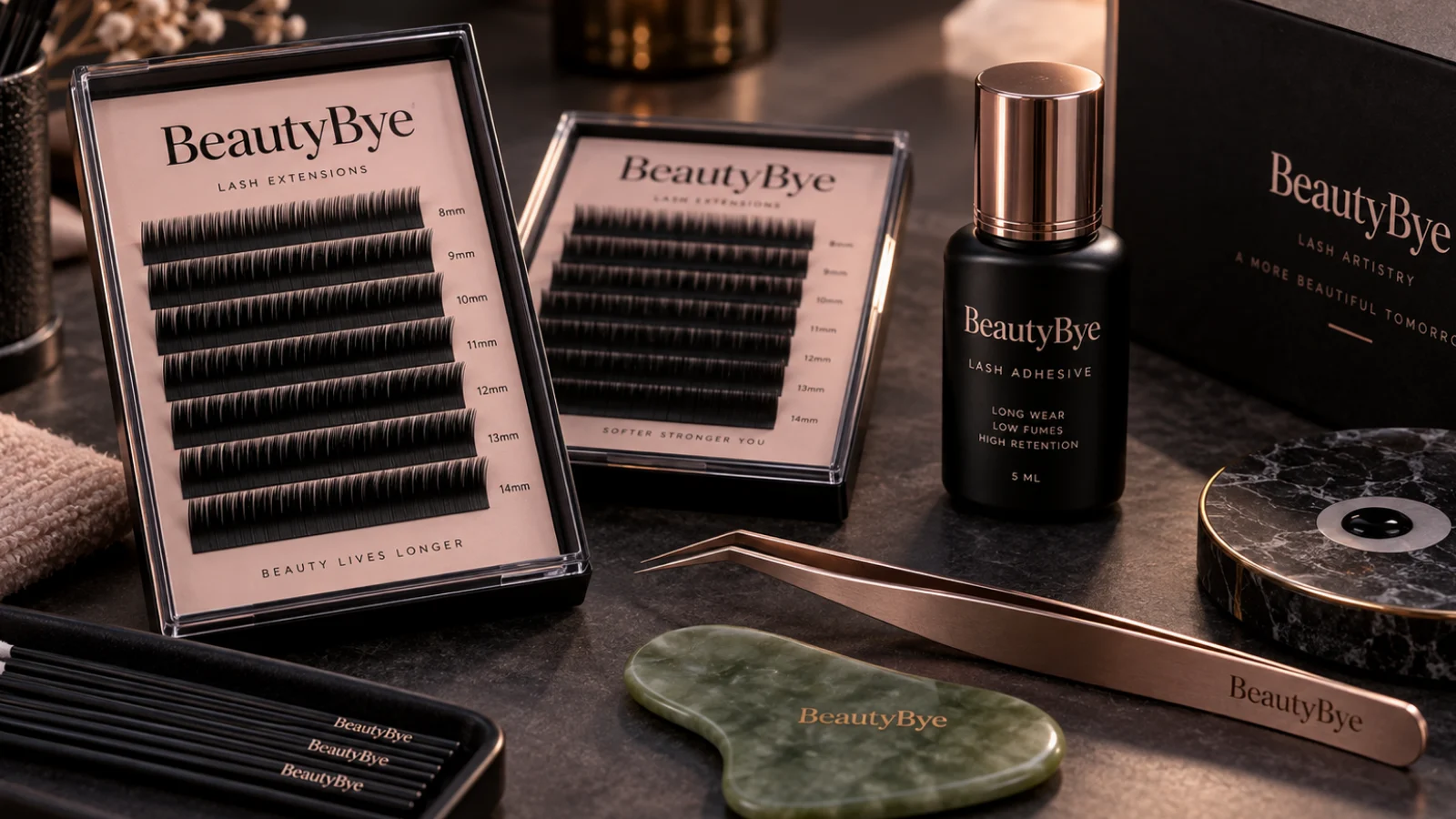
Search for cheap lash glue and you'll find two very different things under the same words. One is adhesive that's cheap because of what's in the bottle. The other is a professional adhesive you already know, sold for less because another lash tech changed products or over-ordered. For almost everything else in a lash kit, the gap between those two is about value. For adhesive, which is applied a millimetre or two from a client's eye, it's also about risk, so it's worth being fussy.
Is Discounted Lash Glue Worth Buying?
Discounted lash glue can be worth buying when it's a recognised professional adhesive that is sealed, in date, stored as the manufacturer directs, and suited to your room conditions. Opened adhesive, adhesive with no batch or dates, and adhesive of unknown origin aren't worth the saving for client work. No listing, and no marketplace, can guarantee how an individual bottle was kept, so the checks below matter.
Avoid adhesive that is cheap because of what it is: unidentified brands, unclear ingredients, no batch or dates.
Consider adhesive that is cheaper because of circumstance: a recognised professional product that is sealed, in date and properly stored, sold because another lash tech changed products or over-ordered.
Treat opened adhesive very cautiously. Lash glue changes quickly once opened, so second-hand opened glue generally isn't a sensible buy for client work.
Follow the manufacturer's instructions for storage, use, and any patch testing your insurer or the manufacturer requires.
Why Lash Glue Is Different From Other Lash Supplies
Lash adhesives used for extensions are typically cyanoacrylate-based. They cure by reacting with moisture in the air, which is why:
Humidity and temperature change how the glue behaves. Manufacturers usually specify the room conditions their adhesive is designed for. Outside that range, curing can be too fast, too slow or incomplete.
Glue starts ageing once it's opened. Air and moisture get in every time the cap comes off. Most professional adhesives are designed to be used within a relatively short period after opening. Check the specific product's guidance.
Storage history matters. Heat, light and humidity can all shorten an adhesive's useful life, even before it's opened.
Fumes and irritation. Cyanoacrylate fumes can irritate the eyes and airways, and some clients and technicians develop sensitivities. Consistent, correctly used products and good technique reduce the risk.
That's why lash glue is priced and handled differently from trays, tweezers or pads. A tray of lashes is stable for a long time. A bottle of adhesive isn't.
What Can Go Wrong With Cheap Lash Glue
Unknown formulation
Adhesives with no clear manufacturer or ingredient information make it impossible to know what's going near your client's eyes, or to answer questions if a client reacts.
Inconsistent curing
Poorly made adhesive can vary from bottle to bottle, making retention unpredictable. A lash tech whose clients start losing extensions early loses infill income and reputation, costing far more than the saving on glue.
Fumes and client discomfort
Clients notice stinging eyes and strong fumes, and they don't come back. A low-cost adhesive that causes discomfort is expensive.
No traceability
Many lash techs record the adhesive and batch used on each client. Without a batch number and manufacturer, you can't do that.
When Discounted Professional Lash Glue Makes Sense
Lash techs do end up with surplus adhesive that's perfectly good:
they switched to a different adhesive that suits their room conditions better
they bought a multipack or bundle and changed products before using it all
they stopped offering lash extensions
they received adhesive in a course kit that isn't their preferred product
In those situations, sealed, in-date adhesive from a recognised professional brand, stored properly, can be a sensible buy. It's the same product the manufacturer shipped. What you're checking is age and storage.
The Checks That Matter for Discounted Lash Adhesive
1. Sealed, not opened
Only consider sealed adhesive for client work. Ask for photos showing the seal or foil pouch intact.
2. Dates and batch
Ask for the batch number and the expiry or manufacture date. Check how much time is left before the expiry date. An adhesive close to its date needs to fit into your usage before it runs out.
3. Storage history
Ask how it was stored: at stable room temperature, away from sunlight and heat, sealed, and, if the manufacturer recommends it for unopened stock, whether it was refrigerated. If it was chilled, the manufacturer's guidance on letting it return to room temperature before opening matters. Adhesive left in a hot car or on a sunny windowsill isn't worth the risk.
4. Product identity
Confirm the brand, product name and version. Many brands sell several adhesives with different drying speeds and different recommended humidity ranges. Buy the one that suits your room and technique.
5. Delivery
Adhesives shouldn't be left in hot conditions in transit. Check the delivery options and plan to receive the parcel promptly.
For more detail on how long adhesive lasts and how to store it, read how long does lash glue last?
Choosing the Right Adhesive Matters More Than the Price
A common reason lash techs end up with surplus adhesive, and a common reason retention suffers, is using an adhesive that doesn't match the room or the technician. Professional adhesives are usually described by drying speed and by the humidity and temperature range they're designed for.
Adhesive profile | Usually suits | Watch out for |
|---|---|---|
Fast-drying | Experienced techs with quick placement; rooms in the manufacturer's recommended range | Setting before placement in drier rooms or with slower technique |
Medium-drying | Most techs and most rooms | Performance shifts if humidity moves outside the range |
Slower-drying | Newer techs, or techs still building speed | Longer set times; clients moving before bonds set |
Formulated for sensitive clients | Clients where fumes are a concern | Often slower drying; still cyanoacrylate-based and still used close to the eye |
The best adhesive for you is the one that suits your room conditions and technique, used exactly as directed. A cheap adhesive that doesn't match your conditions will cost more in retention than a correctly matched professional adhesive at full price. A discounted bottle of the wrong professional adhesive is no bargain either, even if it's sealed and in date.
Before buying discounted adhesive, check your room. A basic hygrometer tells you the humidity you're actually working in. Compare it with the manufacturer's stated range for the adhesive you're considering.
Sensitive Clients and Adhesive Choice
Some clients react to lash adhesive, and some technicians develop sensitivities over time. This is an area where you should rely on the manufacturer's guidance, your training and your insurer's requirements, not on price.
"Sensitive" adhesives are usually formulated to produce fewer fumes. They aren't allergen-free, and they're still used close to the eye.
Patch testing requirements vary by manufacturer and insurer. Follow the instructions for the specific product.
Record the adhesive and batch used on each client. Keep the label and batch number from any adhesive you buy, including surplus stock.
If a client reacts, stop, follow your aftercare and referral procedures, and don't try a cheaper alternative on them.
The Real Cost of Adhesive Per Set
Adhesive is a small part of the cost of a full set, often less than trays or your time, which is why cheap adhesive rarely saves much. A rough comparison:
Estimate how many full sets and infills you get from one bottle within its opened life.
Divide the bottle price by that number.
Compare the saving from a cheaper adhesive against the cost of just one extra infill or retention complaint.
For most lash techs, the saving on a cheap adhesive is small per set, and one retention problem wipes it out. Wasting less of a good adhesive usually saves more.
Cheap Lash Glue vs Professional Adhesive for Less
Cheap lash glue | Professional lash adhesive for less | |
|---|---|---|
Why it's cheap | Formulation and manufacturing cost | Surplus, bundles, product changes |
Manufacturer information | Often unclear | Original packaging and labelling |
Batch and dates | Often missing | On the packaging |
Curing guidance | Vague | Humidity and temperature ranges specified |
Suitable for client work | Not recommended | Only if sealed, in date and well stored |
Suitable if opened second-hand | No | Generally no |
Adhesive for Training and Mannequin Practice
There's one place where the rules relax: practice on a mannequin head or practice strip, never on a person. Students and newer techs practising isolation and placement go through a lot of adhesive, and educators often have part-used bottles left after courses. For mannequin work, a lower-cost adhesive, or a professional adhesive near the end of its opened life, can be a reasonable way to keep practice costs down.
Keep practice adhesive clearly labelled and stored apart from client stock, so it never ends up on a client's lashes by mistake. And bear in mind that practising with a very different adhesive from the one you use on clients won't teach you how your client adhesive behaves.
Other Ways to Spend Less on Lash Adhesive
Buying discounted adhesive isn't the only way to reduce costs. Often it isn't even the biggest one.
Buy sizes you'll finish. A larger bottle is only better value if you use it before it degrades after opening. Many lash techs find smaller bottles waste less.
Control your room conditions. A hygrometer and consistent temperature help adhesive perform as designed and reduce wasted drops.
Dispense carefully. Use a fresh small drop and replace it regularly rather than dispensing large amounts.
Store unopened stock as directed. Poor storage shortens usable life before you've even opened the bottle.
Spend less elsewhere. Trays, tweezers, pads and tape are where surplus buying is most straightforward. See lash extension supplies for less.
What Not to Do
Don't decant adhesive into another container.
Don't mix adhesives or top up a bottle.
Don't use adhesive past its expiry date or past the manufacturer's recommended period after opening.
Don't use adhesive that has thickened, become stringy, separated or changed colour.
Don't use any lash product contrary to the manufacturer's instructions or your insurance requirements.
What a Discounted Adhesive Listing Should Show
For adhesive, the photos matter more than the description. A useful listing shows:
the front label, so you can confirm the brand, product name and version
the seal, foil pouch or shrink-wrap, intact
the batch number and the expiry or manufacture date, legible
the size, so you can judge whether you'll use it in time once opened
The description should add how it was stored, whether it was ever refrigerated, and why it's being sold. If any of that is missing, ask. A seller who stored adhesive properly will usually be happy to say so.
Questions to Ask Before Buying
"Is the seal or foil pouch intact?"
"Could you send a clear photo of the batch number and the expiry date?"
"How was it stored, and was it ever refrigerated?"
"Why are you selling it?"
"When can you post it? I'd like to avoid it sitting in a hot parcel van over a weekend."
When It Arrives
What you do in the first ten minutes decides whether a good bottle stays good.
Check it against the listing: brand, version, seal, batch and dates.
Write the date you received it on the label or in your stock records, along with the batch number.
Store it as the manufacturer directs, away from heat and light, until you need it.
If it's been refrigerated, follow the manufacturer's guidance on letting it reach room temperature before you open it, to avoid condensation getting in.
Try it before a client appointment. Place a few lashes on a practice strip or mannequin head to check the drying speed matches your expectations in your room.
If the seal is broken, the dates don't match the listing, or the adhesive looks thick, stringy or discoloured, don't use it. Raise it through the order's issue control straight away, within the 48-hour review window, with photos.
When Not to Buy Discounted Lash Glue
It's opened, however little has been used.
The expiry date doesn't leave enough time for you to open and use it within the manufacturer's recommended period.
The seller doesn't know how it was stored, or it was kept somewhere warm.
It's the wrong profile for your room: a fast-drying adhesive in a dry room, or a slower one in a humid room.
It isn't identifiable: no brand, no batch number, decanted or relabelled.
It would be posted in hot weather with no way to receive it promptly.
Lash Supplies on BeautyBye
Lash techs on BeautyBye sell sealed adhesive they've switched away from, trays in curls and lengths they don't use, and tools they've upgraded. Buyers and sellers are verified professionals, new listings are reviewed, and BeautyBye's seller terms prohibit expired, recalled, counterfeit and unsafe products. Each listing shows its own condition. Some adhesive listings will be sealed and in date and others won't, so read the photos carefully and use BeautyBye messages to confirm the seal, batch, dates and storage before you buy.
Frequently asked questions
Is cheap lash glue safe?
Lash adhesive is used close to the eye, so an unidentified low-cost adhesive with unclear ingredients or dates is a risk not worth taking. A recognised professional adhesive bought for less, sealed and in date, is a different proposition, but it must still be used and stored exactly as the manufacturer directs.
Should I buy opened lash glue second-hand?
Generally no, for client work. Lash adhesive has a short working life once opened and is very sensitive to how it has been stored, which you can't verify after the fact.
Why does lash glue stop working well?
Common causes are age since opening, exposure to air and moisture, temperature and humidity outside the manufacturer's recommended range, and poor storage. The result can be slower or faster curing, poorer retention and more fumes.
What should a discounted lash glue listing include?
The brand and product name, whether it's sealed, the batch number, the expiry or manufacture date, how it has been stored, and why it's being sold.