Tools
Buying a Used Nail Drill: E-File Checks Before You Pay
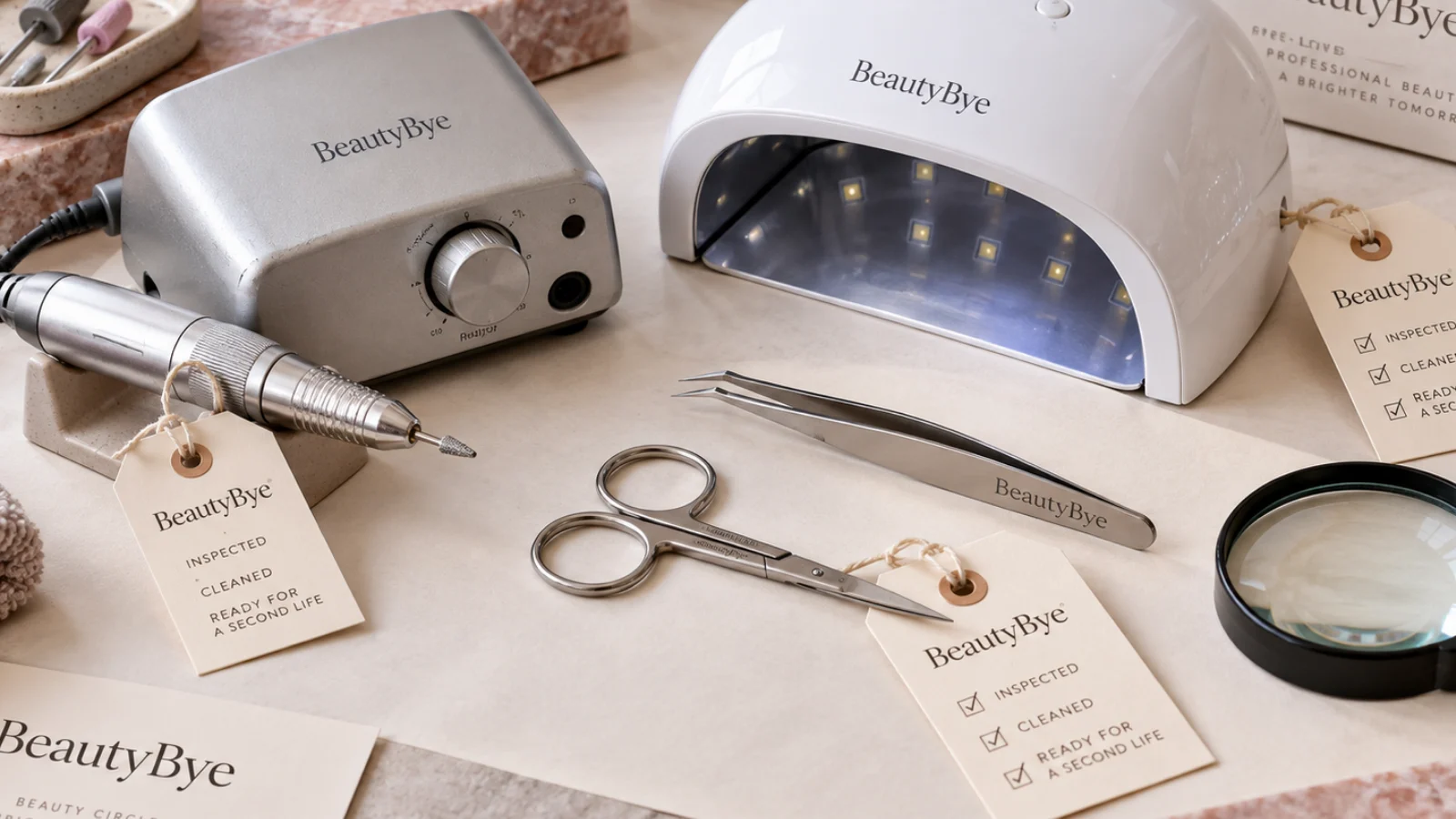
A used nail drill can be one of the smartest purchases a nail tech makes. Professional e-files are expensive new, and they're often sold when a tech upgrades, changes technique or leaves the industry. But an e-file is a precision tool used at speed on clients' nails. A worn handpiece or unstable motor can cause heat spikes, vibration and poor control. The checks focus on the handpiece first and everything else second.
Anatomy of a Nail Drill
Control unit: the box with the power switch, speed control, direction switch and sometimes a display.
Handpiece: the part you hold, containing the motor (in most modern e-files) and the collet that grips the bit.
Handpiece cable: connects the handpiece to the control unit, and is a common failure point.
Foot pedal, on some models, for hands-free speed control.
Handpiece cradle or stand.
Bits: carbide, diamond, ceramic and sanding bands, usually with a standard shank size.
The Handpiece: Check This First
Wobble and run-out
Insert a straight bit and run the drill at a moderate speed. The bit should spin true, without a visible wobble at the tip. Wobble makes precise work harder, causes vibration, and can lead to rings and heat on the nail.
Vibration
Some vibration is normal, but a handpiece that buzzes noticeably in your hand, especially at the speeds you normally use, suggests worn bearings or an imbalanced motor.
Noise
Listen for grinding, rattling or high-pitched whining that changes with speed. A smooth, consistent sound is what you want.
Heat
Run the drill for a few minutes. The handpiece shouldn't become uncomfortably hot. Excess heat suggests wear or an internal problem.
Bit locking
Check that bits lock securely and release smoothly. A collet that doesn't grip properly is a safety issue.
Handpiece cable
Check the cable along its full length, especially where it enters the handpiece and the control unit. Frayed or kinked cables, or ones that only work at certain angles, need replacing.
The Control Unit
Speed control: smooth changes across the range, with no jumps or cutting out.
Forward and reverse: both directions work, which matters for left- and right-handed work.
Display, if fitted, works properly.
Foot pedal, if fitted, controls speed smoothly and the cable is intact.
Power cable and plug: undamaged, with a UK plug or a UK power supply.
Housing: no cracks or signs of overheating.
Speed and Torque: What Matters
Listings often quote maximum RPM, such as 30,000 or 35,000. Most nail work happens well below the maximum. More useful questions are:
Does the drill run smoothly at the speeds you use most?
Does it keep its speed under light pressure, or bog down? That's torque.
Is it stable at low speeds for cuticle work?
A high-RPM drill that vibrates or loses torque is worse than a lower-spec drill that runs smoothly.
Bits: Buy New
Many techs prefer to buy new bits even when they buy a used e-file:
bits wear, and blunt bits create heat and take longer
cleaning and disinfecting bits properly requires the right process
you'll want bits suited to your technique and products
Sealed, unused bits from surplus stock are a good buy. Check the shank size is compatible with your handpiece.
What a Good E-File Listing Includes
The most useful e-file listings show:
the make and model, with a photo of the rating plate
the handpiece close up, including the collet end and where the cable enters
the control unit, cables, pedal and cradle
a short video of the drill running at several speeds, in both directions, with a bit fitted
age, how heavily it was used, and any servicing or handpiece replacement
everything that's included, such as the manual, spare cables and sealed bits
If the listing has no video, ask for one. It's the closest you'll get to holding the handpiece yourself.
What's a Fair Price for a Used E-File?
Most of an e-file's value sits in the handpiece. When you judge a price, start from the current price of the same model new, then think about:
Handpiece condition and history. A recently serviced or replaced handpiece adds value. An unknown, heavily used handpiece reduces it.
Whether a replacement handpiece is available, and what it costs. If a new handpiece is a large share of the price of a new drill, a worn one makes the whole unit worth much less.
Age and use. Light use by a mobile tech is different from years of daily salon work.
What's included. A missing pedal, cradle or cable can be costly to replace.
Warranty. New drills usually have one, and used ones usually don't.
If a used e-file costs close to the same model new, buying new is usually the better choice.
Which E-File Suits You?
Newly qualified techs benefit from smooth, controllable low speeds and a light, comfortable handpiece more than from a high maximum RPM.
Busy salon techs need a drill that stays cool and holds its speed through long days, with a clear service route.
Mobile techs may prefer a portable or rechargeable e-file. Check battery life, charging and whether the battery can be replaced.
Techs doing a lot of removal and structure work will notice torque more than anyone. Test that the drill doesn't slow down under light pressure.
Training and Insurance
An e-file removes product quickly, and poor technique can damage the natural nail. If you're new to e-file work, get proper training before using it on clients, and check whether your insurer needs evidence of e-file training. A cheaper used e-file makes training easier to afford. It doesn't replace the training.
Dust Extraction
Filing with an e-file creates fine dust. Whether your drill is new or used, use effective dust extraction at the desk and follow your workplace's guidance on ventilation and dust. If you're setting up a station, see second-hand nail desks for desks with built-in extraction.
Questions to Ask the Seller
What is the exact make and model?
How old is it, and how heavily was it used?
Has the handpiece been serviced or replaced? When, and by whom?
Are there any faults, even intermittent ones?
What's included: handpiece, control unit, pedal, cradle, cables, manual?
Can you send a video of it running at several speeds, in both directions, with a bit fitted?
Why are you selling it?
Service and Parts
Before buying, check whether the manufacturer or an authorised service centre still services the model, and whether replacement handpieces and cables are available. A drill that can be serviced is a much better long-term buy than one where a handpiece fault means replacing the whole unit.
Understanding Handpiece Types
E-file handpieces differ in design, and it's worth knowing what you're looking at:
Motor-in-handpiece designs, the most common in modern professional e-files, put the motor inside the handpiece. Handpiece condition is therefore the condition of the motor.
Brushless motors are widely used in higher-end e-files and are often associated with smoother running and less maintenance, although condition still depends on use and care.
Handpiece weight and grip affect comfort over long days. A heavy handpiece that's cheap second-hand may not suit you if you do a lot of e-file work.
Replacement handpieces are sold separately for many models. If the control unit is sound but the handpiece is worn, a replacement handpiece can bring a used e-file back to good condition, if it's available at a sensible price.
E-File Hygiene Between Clients
However you buy your e-file, hygiene rules are the same. Clean and disinfect bits according to the manufacturer's guidance and your procedures, or use single-use sanding bands and discard them after each client. Wipe the handpiece exterior between clients with a product the manufacturer approves, and keep dust extraction running during filing.
A Worked Example: Testing a Used E-File
A nail tech is buying a used e-file from a tech who's upgrading. Before paying, she asks for a short video: the drill running at low, medium and high speed in both directions, with a straight carbide bit fitted, filmed so the bit tip is visible. In the video the bit spins true with no visible wobble, the sound is smooth, and the speed changes cleanly.
When it arrives, she fits a new bit, runs it for five minutes at her usual working speed and checks the handpiece doesn't get uncomfortably warm. She tests forward and reverse, checks the handpiece cable along its length, and tries it on a practice nail to check it holds speed under light pressure. Only then does she decontaminate the exterior and add it to her kit.
Foot Pedals and Accessories
If the e-file has a foot pedal, check it controls speed smoothly across its range and that its cable is intact. Check the handpiece cradle holds the handpiece securely, because a dropped handpiece is a common cause of damage.
Common Faults and What They Usually Mean
What you notice | Common causes | What to do |
|---|---|---|
Wobble at the bit tip | Bent bit, worn collet or worn bearings | Try a new, straight bit first; if it still wobbles, the handpiece needs service |
Grinding, rattling or rising whine | Worn bearings or internal damage | Don't buy unless it's priced as needing service and a service route exists |
Handpiece gets hot quickly | Wear, friction or an internal fault | Walk away, or budget for a replacement handpiece |
Cuts out when the cable moves | Damaged handpiece cable or connector | Needs a replacement cable; check one is available |
Speed jumps or won't hold | Control unit, pedal or torque problem | Test with and without the pedal; walk away if it persists |
Bit slips under light pressure | Collet not gripping | Safety issue; don't use until repaired |
These are general patterns rather than a diagnosis. If you're unsure, ask the manufacturer or an authorised service centre before you buy.
Looking After a Used E-File
Use the cradle. A dropped handpiece is a common cause of damage.
Fit bits fully and never force a bit that doesn't seat properly.
Keep the collet clean, following the manufacturer's instructions, so dust doesn't build up where the bit locks.
Don't wrap the cable tightly around the unit when you pack up, especially if you're mobile.
Note any change in sound, heat or vibration, and get it checked before it becomes a failure mid-appointment.
Red Flags
Visible wobble at the bit tip
Grinding or rattling noises
A handpiece that gets hot quickly
Bits that don't lock securely
A damaged or taped handpiece cable
Speed control that jumps or cuts out
An unbranded drill with no manual or service route
Getting a Used E-File Ready for Clients
Inspect everything on arrival and check it matches the listing.
Clean and disinfect the handpiece exterior and cradle following the manufacturer's instructions.
Fit a new bit and test at all the speeds you use, in both directions.
Practise on tips or a practice hand before client use.
Add it to your equipment checks.
Used vs New E-Files
Used e-file | New e-file | |
|---|---|---|
Cost | Lower | Higher |
Handpiece condition | Depends on age and use | New |
Warranty | Usually none | Manufacturer's warranty |
Service history | Ask | Not applicable |
Best for | Techs who can assess a handpiece and have a service route | Techs who want certainty |
E-Files and the Rest of Your Kit
If you're kitting out a nail station, see second-hand UV/LED nail lamps, second-hand nail supplies and nail tech supplies on a budget. For tools more generally, see second-hand beauty tools: when buying used makes sense.
Selling Your Old E-File
If you're upgrading, a working e-file is exactly what many newly qualified techs are looking for. Clean it, fit a bit and film it running at several speeds in both directions. Photograph the handpiece, control unit, cables and rating plate. Be honest about age, use, servicing and any quirks. See where to sell second-hand salon equipment.
Nail Drills on BeautyBye
E-files on BeautyBye usually come from techs who've upgraded, changed technique or moved away from nails, and they're sold to other verified nail professionals. Equipment is graded New, Like new, Good or Fair, with photos and seller notes. Grades can't tell you how a handpiece sounds or whether it runs true, so ask for a running video and any service history through BeautyBye messages, and test the drill before client use.
Frequently asked questions
What is the most important part to check on a used nail drill?
The handpiece. Check for wobble, excessive vibration, unusual noise, heat build-up and whether bits lock securely. Handpiece problems affect every client and can be expensive to fix.
Should I use the drill bits that come with a used e-file?
Many techs prefer to buy new bits, because bits wear with use and need a proper cleaning and disinfection process. Sealed, unused bits are fine.
Is higher RPM better?
Not necessarily. Most nail work is done well below a drill's maximum speed. Smooth running, consistent torque at the speeds you use, and a stable handpiece matter more than the top RPM figure.
Can a nail drill handpiece be serviced?
Many professional handpieces can be serviced or replaced by the manufacturer or an authorised service centre. Check whether that's possible for the model before buying.