Tools
Second-Hand Beauty Tools: When Buying Used Makes Sense
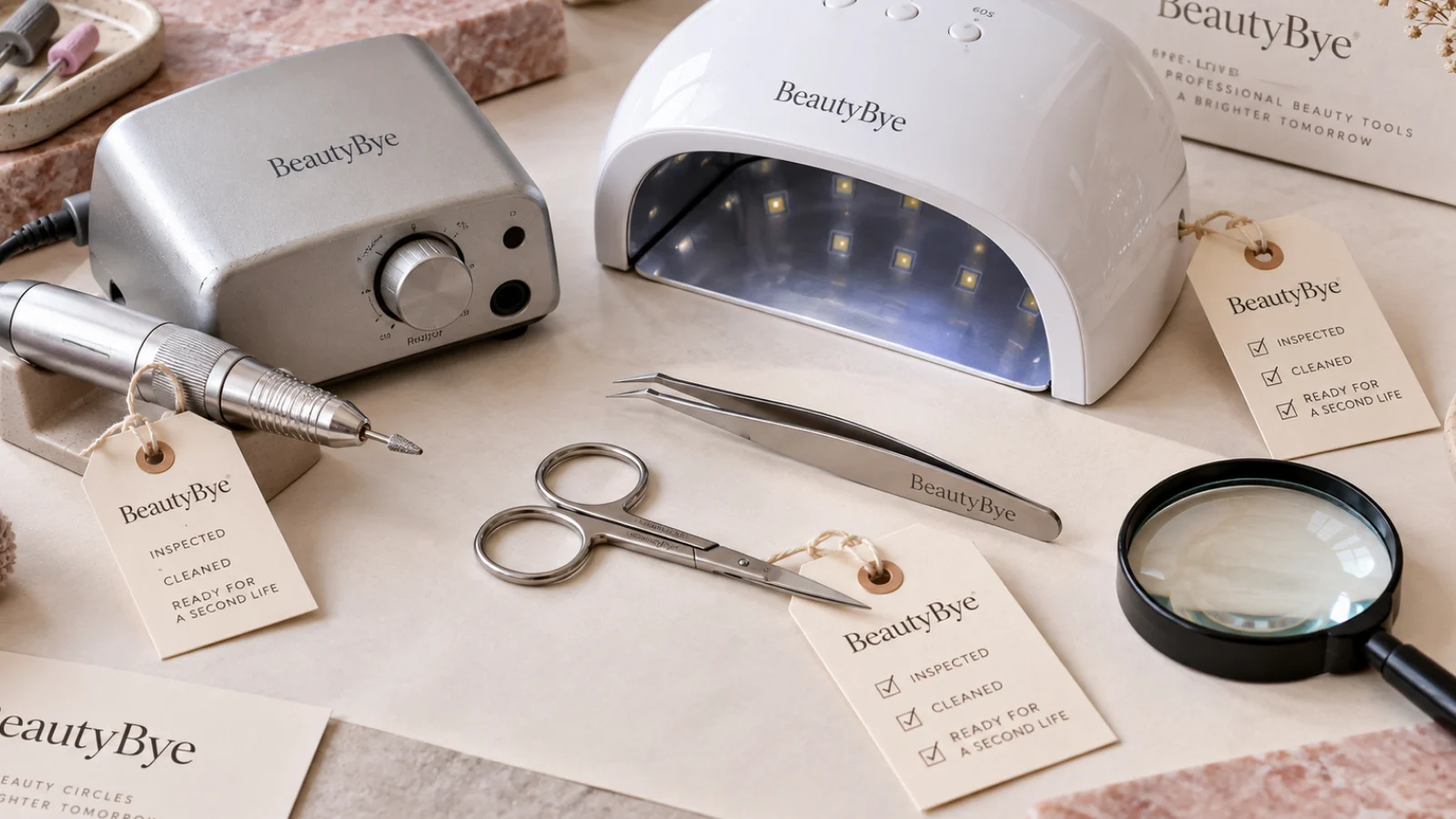
Second-hand beauty tools can be excellent value, but "second-hand" means very different things depending on the tool. A nail lamp or wax heater that's been used for a year can be a great buy after the right checks. A pair of cuticle nippers that's been used on someone else's clients is a different matter entirely. The honest answer to "when does buying used make sense?" comes down to what the tool touches and whether its history can be trusted.
What Counts as a Second-Hand Beauty Tool?
Second-hand beauty tools are professional tools and equipment previously owned by a beauty professional or salon and sold on. They fall into four groups, and each needs a different approach:
Group | Examples | Buying second-hand |
|---|---|---|
Electrical tools and equipment | Nail lamps, e-files, wax heaters, steamers, magnifier lamps, hair dryers and straighteners | Often good value, with electrical and function checks |
Unused hand tools | Nippers, pushers, tweezers and scissors still in their packaging, from course kits and duplicate orders | Good value; check they really are unused |
Used hand tools that cut, grip or break the skin | Used nippers, curettes, tweezers, scissors, blades and sharps | Not listed on BeautyBye |
Porous and single-use items | Files, buffers, orange sticks, sponges, spatulas, micro-brushes, drill sleeves | Only sealed and unused |
Why Used Blades, Sharps and Hygiene-Sensitive Tools Aren't Listed
BeautyBye's Product Safety Policy doesn't allow used porous, hygiene-sensitive or invasive tools, blades or sharps to be listed. The reasoning is simple. A buyer can't see how a used nipper, curette or pair of tweezers was cleaned, disinfected or sterilised between someone else's clients, and some of these tools can break the skin. Even a tool that looks perfect can't show its history. So on BeautyBye, hand tools come as new or unused surplus, and the used tools you'll find are electrical equipment and non-contact items.
Unused Hand Tools: The Real Bargain
Beauty professionals end up with plenty of unused tools:
Course and starter kits that duplicate tools the student already owns
Sets bought for a technique they didn't stick with
Duplicate orders, or a second pair bought "just in case"
Salon closures with boxed stock in the drawer
Quality nippers, pushers, tweezers and scissors bought this way can cost well under the new price. When buying, check:
It's genuinely unused: ideally in the original packaging, with tip protectors in place
Make and material: recognised makers and good-quality stainless steel hold their edge and resist corrosion
Cutting edges and tips: nipper jaws meet cleanly, tweezer tips align precisely, and scissor blades are unmarked
Joints and springs: smooth movement, nothing loose
No rust or pitting, even from storage
Before first use, put every new tool through your normal cleaning and sterilisation routine, exactly as you would a tool bought from a supplier.
Electrical Tools: Where Used Buying Pays Off
Electrical tools, such as lamps, e-files, heaters, steamers, magnifier lamps, straighteners and dryers, are often the best-value second-hand purchases in the trade. Professionals upgrade them regularly while the old ones still work. The core checks are the same across the board:
make, model and safety markings present, with a UK plug
cable, plug and connectors undamaged
housing intact, with no melting, cracks or scorch marks
every function tested and working
no amateur repairs or modifications
a recent electrical test record, if available
Items with a damaged casing, cable, plug, battery or safety feature, or that have been modified or recalled, can't be listed on BeautyBye. Clean any client-contact surfaces as the manufacturer directs, and test the item before client use.
Detailed guides:
Non-Contact Tools and Accessories
Some tools never touch a client, or can be cleaned completely because they're glass or metal with no joints or edges. Glass dappen dishes, brush stands, tool trays, storage cases, mapping rulers and callipers, and lamp stands are easy second-hand buys. Clean them to your usual standard and they're ready to use.
Brushes
Nail, acrylic, gel, lash and brow brushes are porous, hard to clean completely, and shaped by their previous owner's technique. Buy them new or sealed. Sealed brushes from surplus kits are good value.
Single-Use Items: Sealed Only
Files, buffers, orange sticks, sponges, pumice stones, wax spatulas, micro-brushes, mascara wands, threading thread, drill sleeves and sanding bands are single-use or single-client. BeautyBye's policy requires disposables to be sealed and in date, so that's the only way to buy them.
Decontamination Levels, Explained
Whether a tool is brand new, unused surplus or your own everyday kit, it goes through the same routine. It helps to understand the levels salons commonly use:
Cleaning removes visible dirt, debris and residue, usually with detergent and water. It always comes first, because disinfection and sterilisation don't work properly on dirty surfaces.
Disinfection reduces microorganisms on a surface to a safer level, using a suitable disinfectant for the required contact time.
Sterilisation aims to destroy all microorganisms, typically using equipment such as an autoclave where your procedures and treatments require it.
Which level a tool needs depends on how it's used, what it touches, and your local authority's requirements. Follow those requirements, your insurer's rules, your training and the tool manufacturer's guidance, and record tools in your decontamination logs.
Worked Example: Buying Unused Cuticle Nippers
A nail tech sees a listing for quality stainless cuticle nippers from another tech who received a duplicate pair in a course kit.
Photos: she asks for close-ups of the jaws, the joint and the spring, and a photo of the original packaging.
Condition: the tip protector is still on, the jaws meet cleanly along the full edge, and there's no rust or marking.
Price: well below the current new price.
On arrival: she checks them under good light against the photos, then puts them through her full cleaning and sterilisation routine before first use.
Looking After Your Own Tools
Quality implements you already own are worth maintaining. Professional sharpening can restore nippers and scissors to a clean cut, and tension adjustment can fix scissors that feel loose. Servicing usually costs much less than replacing a quality tool. Retire any tool that's cracked, pitted, misaligned or no longer holds an edge.
Where Surplus Tools Come From
techs upgrading to newer electricals
course kits with duplicate tools
salons refitting or closing
professionals changing services
educators clearing training stock
Professional Beauty Tools for Less: The Smart Approach
Buy electrical tools second-hand, after proper checks and a test before client use.
Buy hand tools new or as unused surplus, and sterilise them before first use.
Buy brushes and single-use items new or sealed.
Maintain the tools you have. Sharpening and servicing are usually cheaper than replacing.
Tools on BeautyBye
On BeautyBye, you'll find unused hand tools from course kits and closures, and used electrical tools from professionals who've upgraded, all listed by verified professionals with a condition grade, photos and notes. Ask about packaging and condition for hand tools, and about age, testing and function for electricals.
Frequently asked questions
Can I buy used beauty tools on BeautyBye?
Used electrical tools, such as lamps, e-files, heaters and steamers, yes, with checks. Hand tools such as nippers, tweezers and scissors are listed as new or unused surplus, because BeautyBye's Product Safety Policy doesn't allow used hygiene-sensitive or invasive tools, blades or sharps.
Why can't used nippers or tweezers be listed?
A buyer can't verify how a used tool that cuts, grips or breaks the skin was cleaned and sterilised between someone else's clients. Unused tools, still in their packaging, avoid that problem.
Do unused surplus tools need sterilising before use?
Yes. Put any new tool through your normal cleaning and sterilisation routine before first use, following your local authority's requirements, your procedures and the manufacturer's guidance.
Are used electrical beauty tools safe to buy?
They can be a good buy with checks on the cable, plug, housing, safety markings and function, and a test before client use. Damaged, modified or recalled electrical items can't be listed on BeautyBye.