Guides
Condition Grades for Second-Hand Beauty Stock, Explained
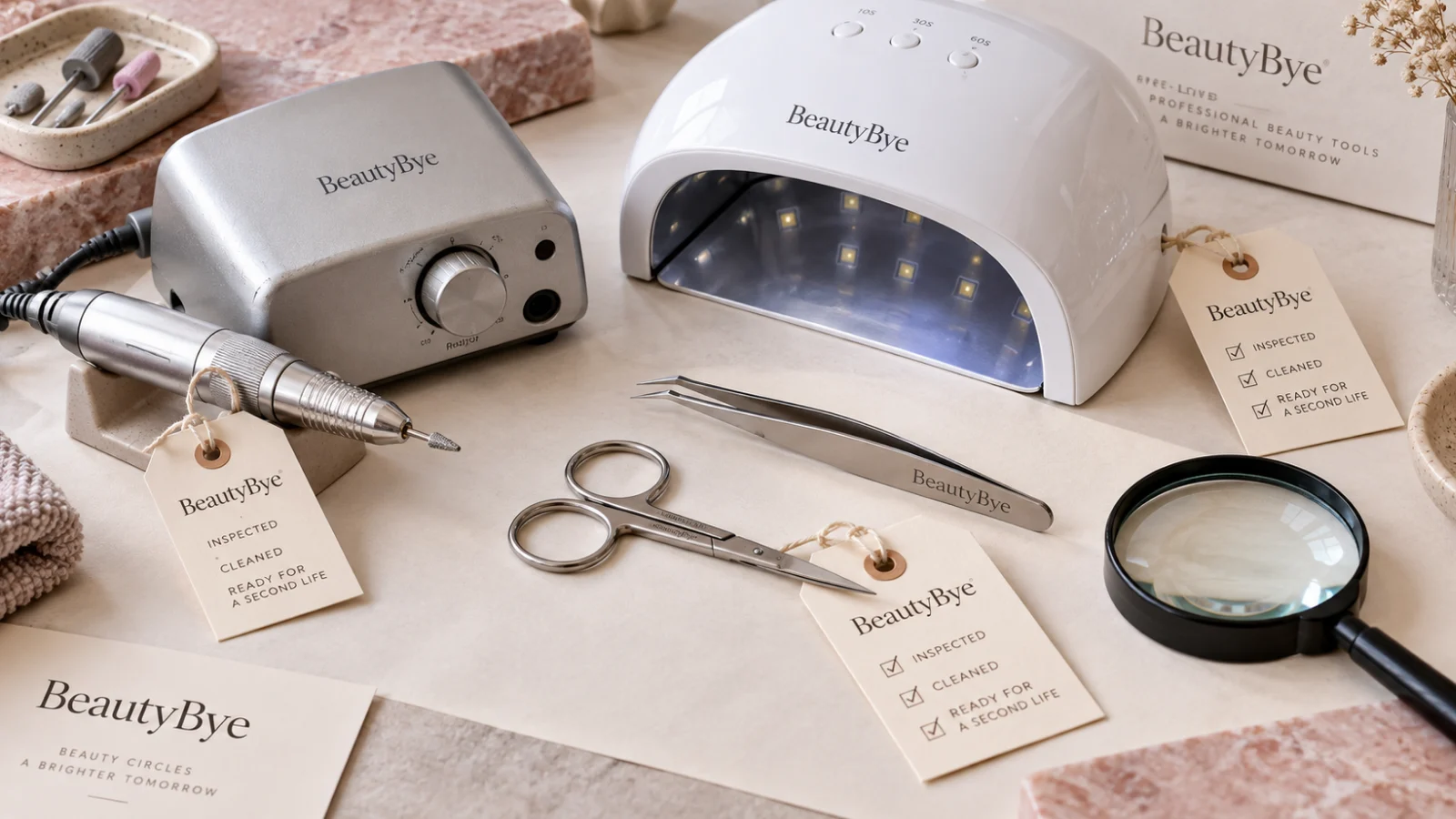
Beauty product condition grades are the short labels a seller uses to describe an item's condition, such as New, New but opened or Sampled/swatched for products, and New, Like new, Good or Fair for equipment. They're a starting point, not a guarantee. Knowing what each grade means, and what it can't tell you, helps you ask the right questions before you buy second-hand professional stock.
Two Scales: Products and Equipment
On BeautyBye, sellers choose a condition from one of two scales:
Beauty products, such as gels, adhesives, tints, wax and skincare: New, New but opened, Sampled/swatched or Other (with a description)
Equipment, such as lamps, drills, heaters, beds and chairs: New, Like new, Good or Fair
Listings also include photos and seller notes. Where the seller provides them, listings can show whether a product is sealed, and its batch number.
Beauty Product Grades
New
The product is new. Look for:
an intact seal, wrap or tamper-evident cap in the photos
the batch number and dates
storage information
"New" doesn't tell you how long the product has been on a shelf, or how it's been stored. Check the dates.
New but opened
The product has been opened, but the seller states it hasn't been used on clients, for example opened to check the shade or texture. Ask:
when it was opened
why it was opened
how it's been stored since
whether anything was removed from it
Opening starts a product's period-after-opening (PAO) clock, and exposes it to air. For sensitive products such as lash adhesive, even "new but opened" needs careful thought. See lash glue shelf life.
Sampled/swatched
Some product has been used, to test, sample or swatch it. The seller's notes should say how much and how. Ask:
how the product was sampled, for example with a clean tool or directly
how much has been used
how it's been stored
Sampled or swatched products are often fine for practice or training. For client use, judge them carefully, especially for products applied near the eyes or to broken skin.
Other
A described condition that doesn't fit the other grades, such as part-used. The description matters most. Read it carefully and ask questions. Listings in this condition may be held for review before going live.
Equipment Grades
New
Unused equipment, ideally in original packaging with accessories and manuals.
Like new
Minimal signs of use, fully working. Ask about age and how much it was used.
Good
Normal wear consistent with use, fully working. Photos should show the wear.
Fair
Noticeable wear or cosmetic issues, but working. Read the notes carefully and look at close-up photos, for example of upholstery.
For any equipment grade, check:
every function works
electrical safety: cable, plug, housing and safety markings
service and repair history
what's included
See second-hand salon equipment: what to check before buying.
Reading Dates on Beauty Products
Condition grades work alongside the product's own labelling:
Batch number identifies the production batch, for traceability.
Expiry or best-before date is the date by which the product should be used.
PAO symbol, an open jar with a number such as 6M or 12M, shows how long the product is intended to be used after opening.
A product can be "New" but close to its expiry date, or "New but opened" and well within its PAO. Check both the grade and the dates.
Examples: The Same Product in Different Grades
It helps to see how the same kind of product might appear under different grades.
A gel polish:
New: sealed in its wrap, with batch and dates photographed.
New but opened: cap opened once to check the shade against a swatch; not used on clients; stored in a drawer.
Sampled/swatched: used to paint a few swatch sticks and one practice hand; three-quarters full.
Other: "Two-thirds full. Opened for a colour-matching trial and used on practice tips only, never on clients. Stored upright in a closed drawer."
A gel polish that has been used on clients, with its brush going from bottle to nail, shouldn't be listed at all. BeautyBye's Product Safety Policy doesn't allow used products applied to a person where their hygiene can't be established.
A UV/LED lamp:
New: boxed and unused.
Like new: used for a few weeks, no marks, all functions working.
Good: used regularly for a couple of years, minor scuffs, all LEDs and timers working.
Fair: visible wear and a cracked base plate (photographed), all LEDs working.
The grade gives the headline. The notes and photos give the detail you need to decide.
Condition Grades and Suitability for Client Work
A useful way to think about grades is to ask how much you'd have to rely on the seller's word. A sealed product lets you verify its condition for yourself. An opened or swatched product asks you to trust how it was handled and stored. For products used near the eyes, on broken skin or in chemical treatments, that trust matters more.
Many professionals therefore:
buy sealed products for client work
use opened or swatched products for practice, training or low-risk uses
judge equipment grades on function and safety first, and appearance second
What Condition Grades Don't Tell You
Storage history: heat, light and humidity exposure
Authenticity: whether the product is genuine
Suitability: whether it works with your system, lamp or technique
Safety for your specific use
Sellers must describe condition accurately, and BeautyBye's Product Safety Policy prohibits counterfeit, expired, recalled and unsafe items. Listings are checked against that policy, and some are held for review before they go live. None of that replaces your own questions and your own inspection when the item arrives.
Questions to Ask by Grade
Grade | Key questions |
|---|---|
New | What are the dates? How was it stored? |
New but opened | When and why was it opened? How was it stored since? |
Sampled/swatched | How much was used, and how? How was it stored? |
Other | What exactly is the condition? How much remains? |
Like new, Good, Fair | How old? How used? Every function working? Repairs? |
For Sellers: Choosing the Right Grade
choose the grade that honestly reflects the condition
photograph seals, labels, batch numbers and dates
describe opening, sampling and storage in your notes
describe equipment wear and function honestly
Accurate grades build trust and reduce disputes. See where can I sell unwanted professional beauty products?
Condition Grades by Category
The same grade means slightly different things in practice depending on the category, because products age and wear in different ways.
Nails
For gel polish, builder gel and hard gel, New means the bottle or pot is sealed and unused. New but opened usually means the seal is broken but the product hasn't been used on clients, perhaps because a tech opened it to check the shade. Sampled/swatched means a small amount has been used, often for a swatch or a practice nail. For gel products, the questions that matter most are storage (heat and light can thicken or partly cure gel), the PAO and how much is left. Opened gel products are a judgement call for client work, and you should always follow the manufacturer's guidance.
Lashes and brows
For lash trays, New means sealed. An opened tray with some rows used is best listed as Other with a clear description of how many rows remain. For adhesives, lift and lamination solutions, tints and developers, only sealed, in-date products are straightforward buys. Opened chemical products are listed as opened, and buyers should usually avoid them for client work. See lash glue shelf life.
Waxing and skincare
Sealed wax is simple to grade. A tin of wax that has been heated and used on clients shouldn't be listed, because its hygiene can't be established. For skincare, New means sealed, and anything opened should be described carefully, including the PAO and how it was stored. Jars that have been dipped into carry more contamination risk than pumps or tubes.
Equipment
Equipment grades are about function and wear. Like new means barely used, with no visible wear and every function working. Good means normal signs of use but full function. Fair means visible wear or a minor issue, which must be described. For any electrical item, the listing should also state whether it's been tested, and buyers should test it before client use. See second-hand salon equipment: what to check before buying.
Grades and Price
As a rough guide, price falls as the grade moves further from New, and more steeply for chemical products than for equipment. A sealed builder gel close to its full shelf life holds its value well. An opened adhesive has little value to a professional buyer. A Good-condition treatment couch can still be excellent value, because frames and mechanisms last for years. See how to price second-hand salon equipment and surplus stock.
For the wider picture, see the complete guide to buying second-hand professional beauty supplies. When you're ready, browse listings on BeautyBye and read each listing's grade, photos and notes together.
Frequently asked questions
What does 'New but opened' mean?
The product has been opened, for example to check shade or texture, but the seller states it hasn't been used on clients. Buyers should still check dates, storage and how it was handled.
What does 'Sampled/swatched' mean?
Some product has been used to test or swatch it. The seller's notes should describe how much and how. These products need extra care, especially for client use.
What are the equipment condition grades?
Equipment is graded New, Like new, Good or Fair. Each grade should be supported by photos and notes on wear, function and any repairs.
Does a condition grade guarantee a product is safe?
No. A grade is the seller's description of condition. It doesn't replace checking dates, storage and function, or following the manufacturer's instructions.